June 11, 2026
$5 Fuel = Frequency
She didn’t plan to become a Costco loyalist. She planned to stop for gas.
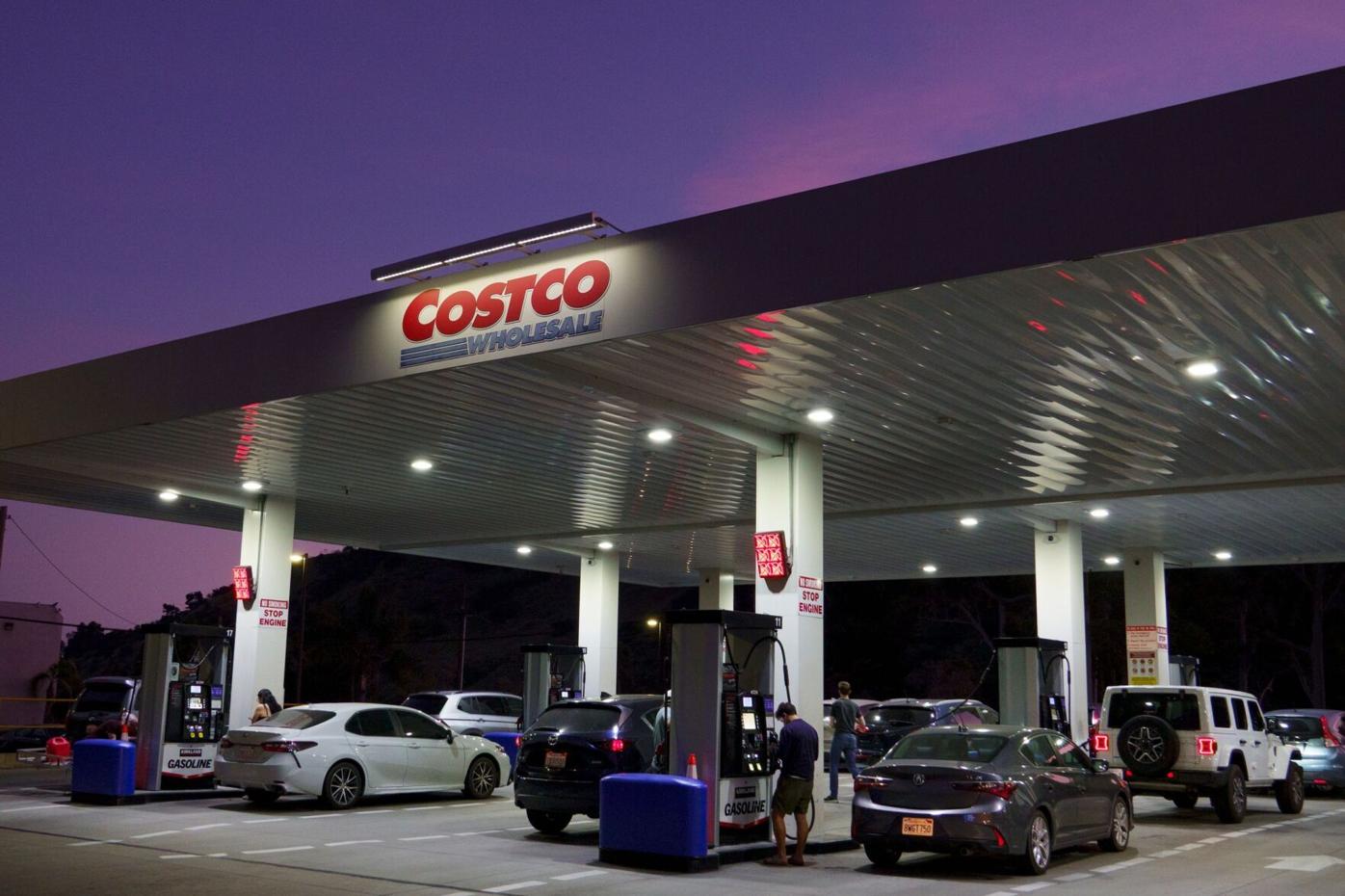
That’s how it started for a lot of people who became Costco members this spring. Record prices at the pump, a Costco nearby with a line stretching into the street, and savings of 30 cents per gallon waiting on the other side of a $65 membership. A two-driver household burns through roughly 1,150 gallons a year. That’s $345 in annual gas savings. The membership paid for itself before she bought her first rotisserie chicken.
Gas crossed $5 a gallon across much of the country this year. The consumer felt it first. The restaurant industry felt it next. Research shows that every $1 increase in gas prices drives a measurable decline in restaurant visits, an effect that doubles above $4 a gallon. People started cooking again, not because they wanted to, but because the math said so.
Grocery trips went up. Grocery spending is projected to grow 8% in 2026, the only consumer category expected to increase at all. Most of that growth is inflation-driven, not volume-driven. But consumers are still going to the store; they’re just making different choices when they get there.
Standing in the produce aisle, a price-conscious shopper looks at the pre-cut mango in the plastic tub. $5.99. Let’s put it back. Even though it takes more cutting, a whole mango is just $1.49. More trips, smaller basket each time. 44% of shoppers say they’re buying more store brands than last year; private label now accounts for $330 billion in annual U.S. grocery sales. Loyalty is shifting to the store. The manufacturer is an afterthought.
So which stores are capturing market share right now?
Costco’s results are unambiguous. The company reported record-breaking gas volumes in Q3 2026 and a 5% increase in store traffic, driven in part by a wave of first-time gas station visitors who joined specifically for the fuel savings. Consumer Reports’ February 2026 analysis found Costco 21.4% cheaper than Walmart on a comparable grocery basket. Personal finance researchers consistently estimate that regular Costco shoppers save $500–$1,200 annually on groceries, a number that reflects Costco handling most but not all of a family’s shopping. Add $345 in annual gas savings for a typical two-driver household at 30 cents per gallon, subtract the $65 membership fee, and the net annual savings are $780–$1,480. At $5 a gallon, that case gets easier to make, not harder.
But Costco isn’t the only retailer winning this moment. Kroger is the less obvious story.
Kroger operates 1,731 fuel centers — more than Wawa, more than QuikTrip, double Walmart’s fueling footprint, four times Albertsons’. Their fuel points program ties grocery spend directly to gas savings: earn one point for every grocery dollar, redeem 100 points for 10 cents off per gallon, up to $1 off per fill-up on 35 gallons. The savings scale with spend, because the more you spend on groceries at Kroger, the more your fuel membership points compound at the pump. For households that make Kroger their primary grocer, personal finance estimates put the combined value of fuel points and digital coupons at $420–$600 per year, and those figures were calculated before gas crossed $5. Kroger is now planning its biggest price cuts in years, doubling down on value at precisely the moment the consumer is most attentive to it.
The mechanism is different from Costco’s, and that’s the point. Kroger is closer to home, carries more SKUs [a typical grocer carries 30,000 to 50,000 individual items where Costco stocks 3,200], and works for a daily shop without a bulk purchase commitment. It earns a different kind of loyalty — frequency, not membership — and delivers it through the same legible savings the consumer feels at every fill-up.
Aldi and Trader Joe’s win the same consumer through a third path: no gas stations, no fuel points, just private label pricing that beats national brands at the shelf. Same beneficiary, different mechanism.
What these retailers share isn’t geography or scale. It’s a savings mechanism the consumer can see and feel at the pump and on the receipt every week. That’s what’s separating the grocers thriving in this environment.
When consumers win — a $4.99 chicken, a good deal on a store brand they trust, gas that costs less than expected — the retailer wins. So do the centers built around these important daily needs tenants.
That newly minted Costco loyalist is a case in point. Every Costco decision is made based on supporting members.
For Costco, Kroger, Aldi, and Trader Joe’s, it starts and ends with her.