February 4, 2026
Inside Amazon’s Tampa Fulfillment Engine (TPA4): Robots, Dumplings, and Strategy Made Physical
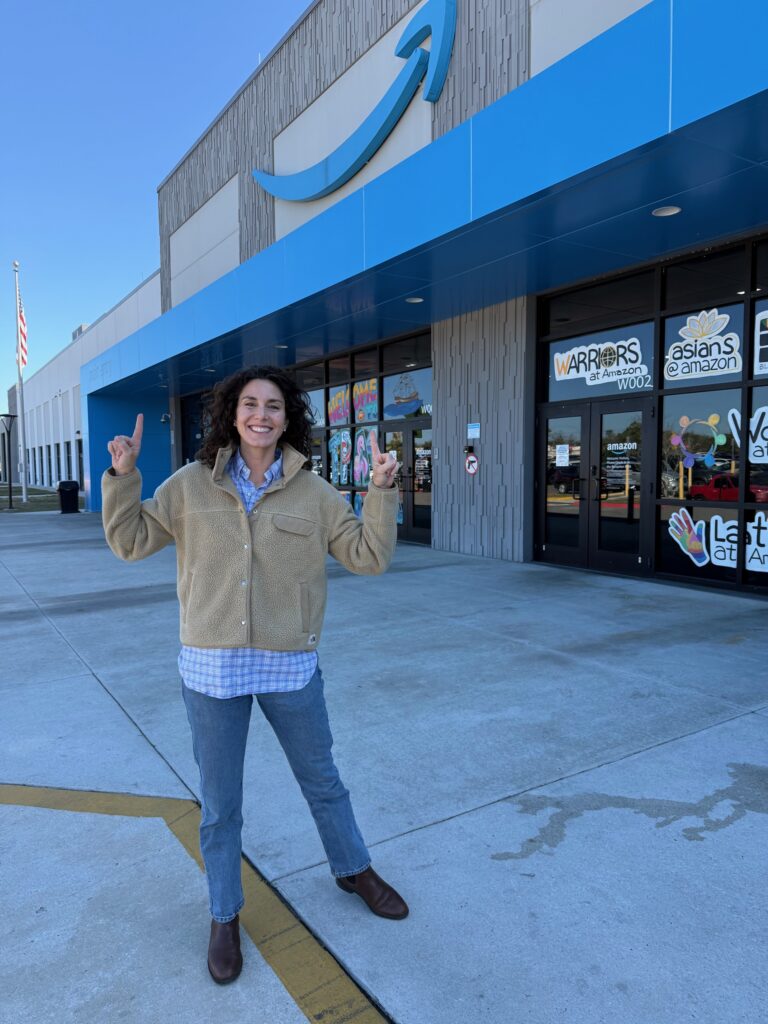
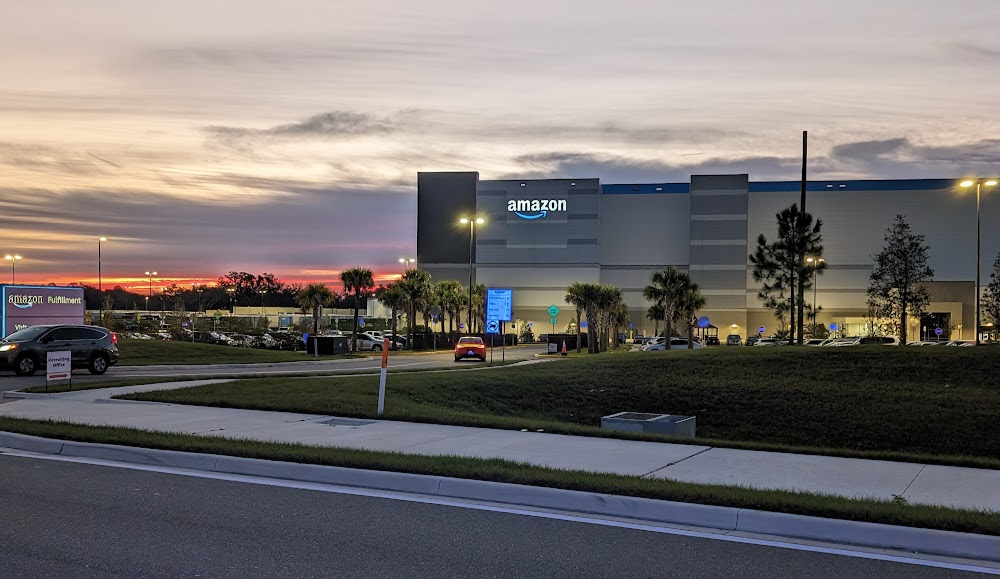
Amazon’s TPA4 facility in eastern Tampa is a clear example of a company building its strategy… in concrete, conveyor belts, and robotics.
This is more than a warehouse, it’s an operating system for “everything, everywhere, fast.”
The Quirky Things You Don’t Forget
A few moments that made the fulfillment center feel uniquely Amazon:
25 million SKUs in one building.
This is assortment at a scale that no physical retailer would even attempt — because Amazon’s promise is breadth, not curation.Inventory lives here for only ~9 days.
This isn’t storage. It’s velocity. Products are constantly flowing, repositioned across the network.
Winter hats don’t sit in Tampa — they get routed to Syracuse.Everything is scanned: an average of six times per item.
Items arrive in master packs, opened by associates, sorted into yellow bins, and then randomly sorted to bins and racks. The building always knows what’s where. You don’t want ten thousand iPhones all living in a dozen racks, you want a few on each racks so that when demend is high there are no bottlenecks.
The Robot Universe
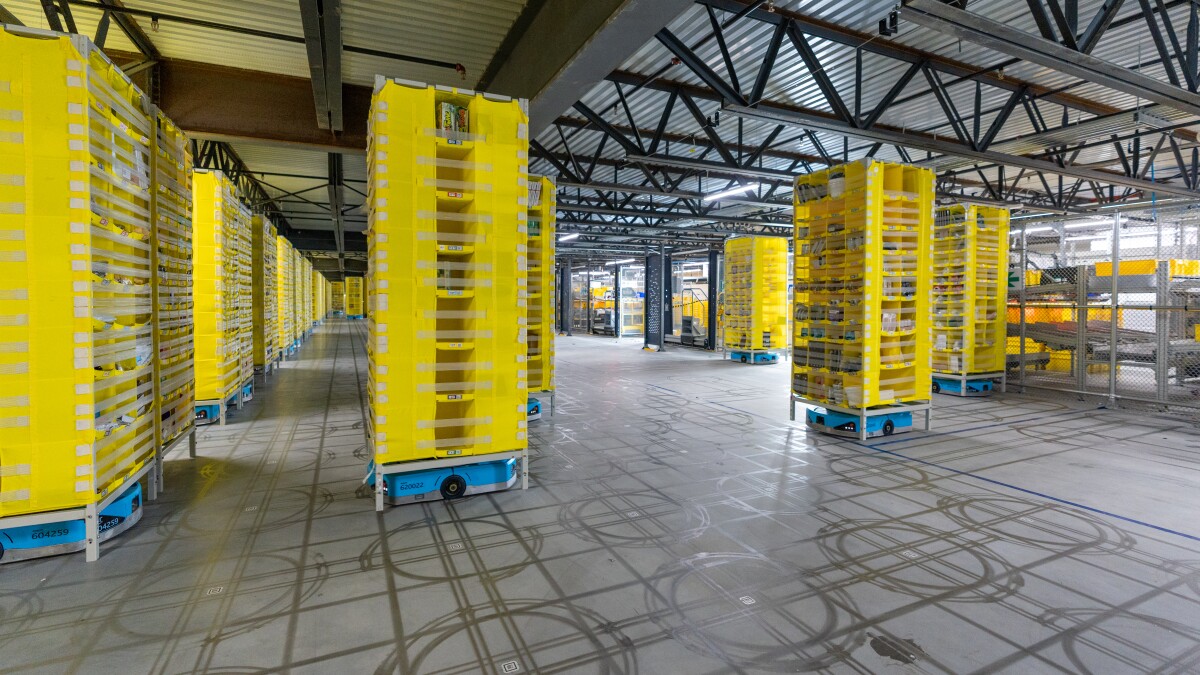
Amazon’s robotics are the backbone of the model, built on Kiva technology Amazon acquired years ago.
Hercules
These robots move entire racks of inventory around the facility.
They navigate by reading QR codes embedded in the floor — like warehouse lane markers for machines.
Pegasus
Think smaller, faster conveyor-belt robots that take labeled packages and sort them toward the right chute, making their way to the right trailer.

Proteus (the next generation)
This is the leap forward. Unlike Hercules and Pegasus, Proteus doesn’t need QR codes on the floor.
It navigates using sensors and vision, can detect humans naturally (no special vests), and occasionally shows what can only be described as road rage when another unit is moving too slowly they sometimes try to pass each other.

Packaging
Some of the most “Amazon” innovation is in the tiny process choices:
The “dumpling machine” — automated packaging that uses roughly 50% less corrugated cardboard, producing these compact, thin boxes at massive scale.
Boxes aren’t addressed immediately.
At first they carry only a barcode — the identity comes later.Shipping labels are applied with air pressure, and the adhesive doesn’t fully set for 15 minutes.
Why? Any errors can be addressed and the box can be savedA one-armed robot named Robyn uses air suction to lift packages off the conveyor belt and hand them to the correct Pegasus unit.

Why This Works for Amazon (and almost no one else)
This system is perfect for Amazon because Amazon is built around one core promise:
Infinite assortment, delivered anywhere.
To deliver “everything,” you need:
Robotics
Scanning
Motion
Speed
Network-level demand routing
Automation layered on automation
But remember:
Great physical retailers aren’t trying to deliver 25 million things.
They’re trying to deliver the right things.